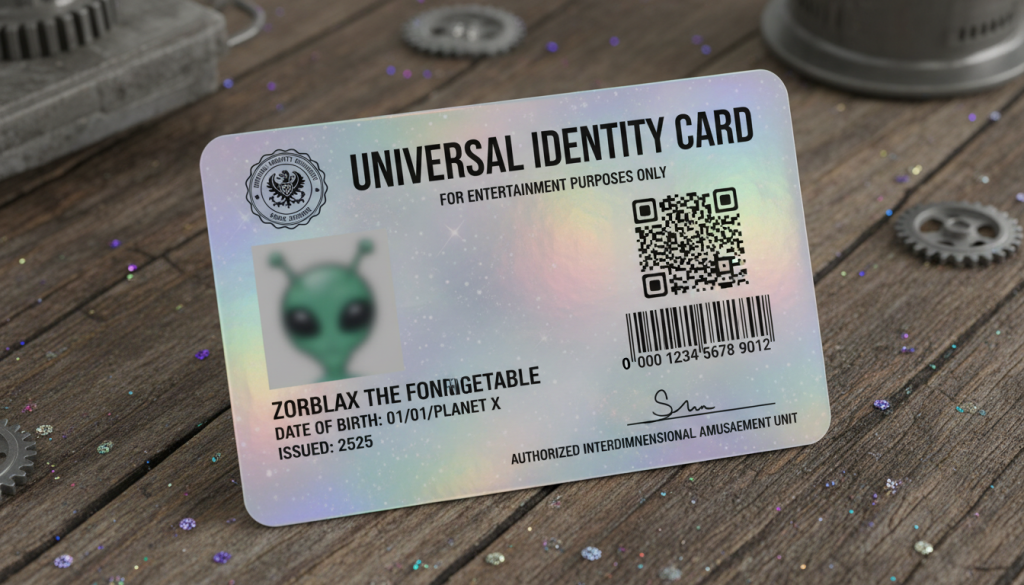
In the evolving landscape of digital media, film production, and private collection, the demand for high-fidelity props has reached a sophisticated peak. No longer are creators satisfied with low-quality stand-ins; today, the focus is on “immersion.” Whether it is for a period-piece film set in the near future or a high-stakes theatrical production, the details matter. This shift has led to a significant interest in a professional novelty ID overview, as creators look for assets that bridge the gap between imagination and reality.
The Art of Theatrical Realism
The primary driver for the novelty ID market has always been the entertainment industry. In the world of cinematography, “the close-up” is king. When a character pulls out a wallet or presents identification on screen, the audience’s suspension of disbelief depends entirely on the quality of that prop.
Modern novelty IDs are designed with this level of scrutiny in mind. They incorporate high-resolution printing, realistic holographic overlays, and tactile elements that mimic official documents without attempting to circumvent legal standards. For producers, understanding the technical specifications—from PVC thickness to micro-print clarity—is essential for maintaining the visual integrity of their project.
A 2026 Novelty ID Overview: What defines Quality?
As we move into 2026, the technology behind prop creation has advanced significantly. A truly high-quality novelty item is defined by several key technical factors that enthusiasts and professionals look for:
- Substrate Quality: Premium props use high-grade synthetic materials that provide the correct flex and durability.
- Holographic Precision: Modern overlays utilize multi-spectrum light diffraction to create a visual depth that looks authentic under studio lighting.
- Micro-Text Integration: One of the hallmarks of a professional prop is the inclusion of legible micro-text, a detail that often goes unnoticed by the casual observer but is vital for high-definition 4K and 8K filming.
- Digital Compatibility: Some modern novelty items are designed to interact with NFC or QR-based digital storytelling apps, adding a layer of interactivity to live-action role-playing (LARP) or immersive theater.
The Collector’s Perspective: Commemorating the Moment
Beyond the film set, novelty identification serves a unique purpose in the world of specialized collecting. Fans of specific franchises or historical periods often seek out “limited edition” or custom-designed IDs that represent their favorite fictional universes.
In this context, the value lies in the craftsmanship. Collectors treat these items as pieces of art—tangible connections to the stories they love. For these individuals, a detailed novelty ID overview serves as a guide to distinguish between mass-produced replicas and high-end, artisan-crafted pieces that will hold their visual appeal for years to come.
Security Awareness and Educational Use
Interestingly, there is a growing niche for novelty identification in the field of security training. Professional security consultants often use high-quality novelty items to train personnel on what to look for in modern documentation. By using these props as “training aids,” organizations can simulate real-world scenarios in a controlled, legal environment. This educational use case highlights the importance of precision in manufacturing, as the training is only as effective as the realism of the tools provided.
Navigating the Industry with Integrity
When exploring the world of novelty identification, the most important factor is the reputation of the provider. Professionalism and transparency are the markers of a high-quality service. Legitimate providers focus on the creative, commemorative, and educational value of their products, ensuring that every piece is a testament to modern printing technology.
Conclusion
The world of novelty identification is far more complex than it appears on the surface. It is a intersection of graphic design, material science, and theatrical storytelling. As creators and collectors continue to push for higher standards of realism, the industry will undoubtedly continue to innovate. Whether for the screen, the stage, or the display case, a professional understanding of these assets ensures that the final result is nothing short of spectacular. In the end, it’s the small details—the ones that most people never see—that make the biggest difference in creating a truly immersive world.
