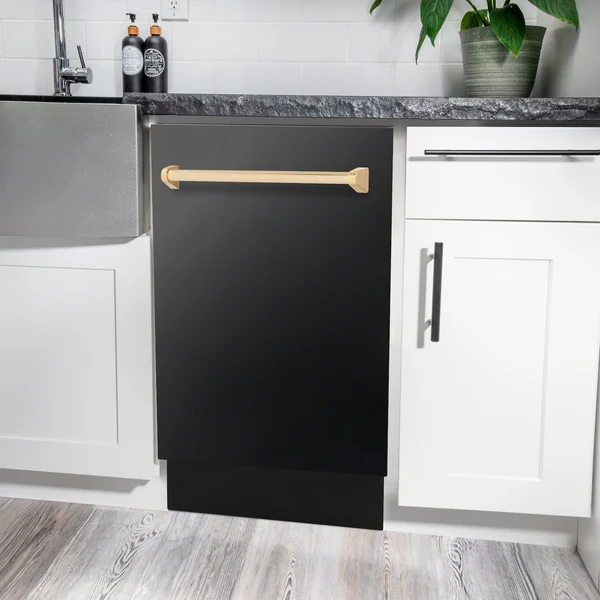
A dishwasher is one of the most frequently used appliances in many kitchens, making its design and performance important for everyday convenience. While basic models can handle routine cleaning, luxury dishwashers are generally designed with a broader combination of quiet operation, flexible loading, advanced wash cycles, refined construction, and enhanced drying options.
The term “luxury” does not represent a standardized technical category, so buyers should examine actual specifications instead of relying only on the label. Features such as rack design, cleaning technology, noise level, water consumption, drying performance, installation requirements, and capacity can provide a much clearer picture of what a dishwasher offers. This guide explains the features that are commonly associated with high-end dishwasher models and how to evaluate them objectively.
What Defines Luxury Dishwashers?
There is no single specification that officially classifies an appliance as a luxury dishwasher. Instead, the category generally refers to models positioned toward the higher end of the market because of their materials, design, technology, performance, or combination of features.
Luxury dishwashers may include stainless-steel interiors, sophisticated filtration systems, multiple spray zones, adjustable racks, third racks, advanced drying systems, quiet motors, specialized wash programmes, and smart controls.
However, a higher purchase price does not automatically guarantee better cleaning. Buyers should compare measurable specifications and determine whether the additional features are useful for their household.
1. Quiet Operation
Noise is one of the most noticeable differences between dishwasher models. It becomes particularly important in open-plan kitchens where the appliance operates close to dining and living areas.
Dishwasher noise is measured in decibels, or dBA. Lower numbers generally indicate quieter operation. Whirlpool notes that dishwasher noise levels commonly fall within the 40s and 50s dBA range, although exact performance varies by model.
For a high-end kitchen, a quieter dishwasher can be particularly useful because it allows cleaning cycles to run with less disruption.
Instead of relying on terms such as “silent” or “ultra-quiet,” compare the manufacturer’s published sound rating.
2. Flexible Rack Systems
Interior organization has a major effect on how much usable space a dishwasher provides.
Many advanced models feature adjustable racks that can be raised or lowered to accommodate taller cookware, bottles, glasses, and other items. Third racks can provide an additional loading level for utensils and smaller pieces. Whirlpool’s current dishwasher guidance identifies adjustable racks and third racks among features that can improve loading flexibility.
This can be particularly valuable for households that regularly wash different types of cookware.
A well-designed interior may also reduce the need to run multiple cycles because more items can be positioned effectively in a single load.
3. Advanced Cleaning Cycles
Different dishes require different cleaning approaches. A dishwasher with multiple programmes can allow users to select a cycle based on soil level, load type, and available time.
Common options include:
- Normal cycles
- Heavy-duty cycles
- Quick washes
- Delicate programmes
- Sensor-based cycles
- Rinse programmes
- Energy-saving cycles
Sensor cycles can be particularly useful because they detect soil levels and adjust aspects of the wash programme accordingly. ENERGY STAR identifies soil sensors, improved filtration, efficient water jets, and improved rack designs among technologies used in certified dishwashers.
The number of programmes is less important than whether the available options are genuinely useful for everyday cooking habits.
4. Efficient Water and Energy Use
High-end design should not be confused with excessive resource consumption. Energy and water efficiency are important when evaluating any modern dishwasher.
Current ENERGY STAR criteria for certified standard residential dishwashers set a maximum annual energy consumption of 240 kWh and a maximum water consumption of 3.2 gallons per cycle. Compact certified models have separate limits of 155 kWh per year and 2.0 gallons per cycle.
The ENERGY STAR programme also recommends checking the EnergyGuide label to compare estimated annual energy use and operating costs between applicable models.
Running full loads can also improve resource efficiency because dishwashers generally use similar amounts of water and energy regardless of how many dishes are loaded.
5. Improved Drying Systems
Cleaning performance is only one part of dishwasher performance. Drying determines whether dishes are ready to store immediately after the cycle ends.
Different models use different drying methods. Some rely on residual heat, while others use heated drying, fans, condensation systems, or automatic door opening.
Higher-priced appliances may offer several drying settings, allowing users to prioritize drying performance or energy savings depending on the load.
Plastic containers can be more difficult to dry than glass or ceramic dishes, so homeowners who frequently wash plastic food-storage containers should pay particular attention to the drying system.
6. High-Quality Interior Construction
The materials used inside a dishwasher can influence durability, appearance, and resistance to everyday use.
Stainless-steel tubs are common among higher-end models. They can provide a durable interior surface and are often associated with premium appliance construction.
However, interior material should not be considered independently. The filtration system, racks, spray arms, seals, and overall engineering also contribute to long-term performance.
Regular maintenance remains important regardless of construction quality. Filters should be cleaned according to the manufacturer’s instructions, while spray arms should be checked periodically for blockages.
7. Smart and Convenient Controls
Some modern dishwashers include smart features that allow users to monitor or control aspects of the appliance through connected devices.
Potential functions can include:
- Cycle notifications
- Remote monitoring
- Maintenance alerts
- Diagnostic information
- Programme selection
- Energy-use information
Connected features can add convenience, but they are not essential for effective dishwashing. Buyers should consider them secondary to core requirements such as cleaning, drying, noise, capacity, and reliability.
8. Integrated Kitchen Design
Design is often an important part of a high-end kitchen. Some dishwasher models are designed to coordinate with surrounding appliances, while panel-ready models can accept a custom cabinet panel for a more integrated appearance.
This approach can help the dishwasher blend into the cabinetry rather than becoming a prominent visual element.
When selecting an appliance for a renovated kitchen, homeowners should confirm the required panel dimensions, door clearance, installation depth, and handle configuration before ordering.
How Do Premium Dishwashers Compare?
The term premium dishwashers is also a market description rather than a standardized technical classification. Premium models may overlap considerably with luxury models in terms of features.
A useful comparison should therefore focus on actual specifications.
For example, compare:
| Feature | What to Check |
| Noise | Published dBA rating |
| Capacity | Number of place settings |
| Loading | Adjustable and third racks |
| Cleaning | Cycle selection and sensors |
| Drying | Drying technology and options |
| Efficiency | Energy and water consumption |
| Installation | Dimensions and connection requirements |
| Controls | Physical and connected features |
This approach makes it easier to determine whether a higher-priced model offers features that are genuinely relevant.
What Size Dishwasher Should You Choose?
Size should always be determined by the kitchen opening and household requirements.
ENERGY STAR defines standard-capacity dishwashers as those holding more than eight place settings plus six serving pieces, while compact-capacity models hold less than that amount.
A larger household may benefit from a higher-capacity model, while smaller households may prefer a compact appliance that occupies less space.
Before purchasing, measure the available width, height, and depth. Also consider door clearance and the location of water, drainage, and electrical connections.
What Should You Consider Before Buying?
Before choosing luxury dishwashers, create a practical checklist.
Consider:
- Available installation space
- Household size
- Typical dish load
- Noise requirements
- Cleaning programmes
- Rack flexibility
- Drying performance
- Water and energy consumption
- Maintenance requirements
- Warranty and service arrangements
This helps prevent the common mistake of choosing an appliance primarily because it looks attractive or has a high price.
Is a Luxury Dishwasher Worth the Investment?
Whether the additional cost is worthwhile depends on how much value the household places on specific features.
Someone with an open-plan kitchen may benefit significantly from quieter operation. A large family may prioritize capacity and flexible racks. A homeowner who frequently cooks may value specialized wash cycles and stronger drying performance.
In contrast, someone who runs only a few loads each week may not benefit enough from every advanced feature to justify a substantial price difference.
The goal should therefore be to identify the features that solve actual household needs.
Conclusion
Luxury dishwashers can combine quiet operation, flexible loading, sophisticated cleaning programmes, efficient resource use, advanced drying, and refined kitchen integration. However, the term itself does not guarantee a particular level of performance, so buyers should compare measurable specifications before making a decision. Features such as soil sensors, improved filtration, efficient water jets, adjustable racks, and multiple wash cycles can provide practical benefits, while ENERGY STAR certification offers an established way to compare efficiency among qualifying models. For shoppers comparing premium dishwashers, the most useful approach is to evaluate capacity, noise, cleaning, drying, efficiency, installation, and maintenance together. Anyone researching a dishwasher for sale should also consider the total ownership cost and whether the appliance’s features genuinely justify its price. A well-chosen dishwasher should complement the kitchen while providing reliable performance for everyday use.