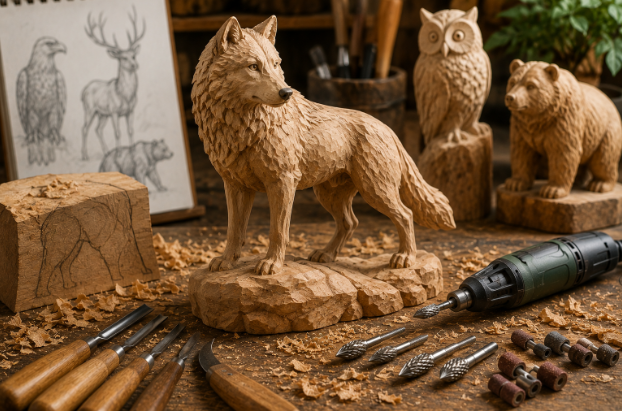
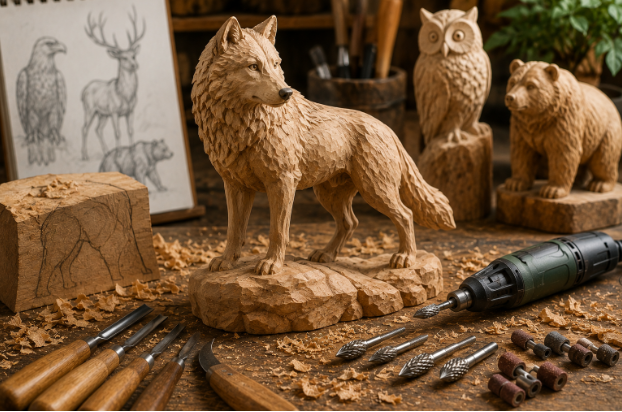
Wood carving has long been celebrated as one of the oldest forms of artistic expression, allowing craftspeople to transform ordinary pieces of wood into detailed works of art. Among the many carving styles, animal carvings continue to capture the imagination of beginners and experienced woodworkers alike. From realistic wildlife sculptures to stylized birds, bears, and woodland creatures, carving animals provides an excellent opportunity to develop carving skills while creating meaningful decorative pieces.
Learning animal wood carving is both a creative and technical process. It requires an understanding of animal anatomy, wood grain, carving techniques, and the proper use of tools to shape each piece with precision. Whether you’re carving a simple owl or a detailed wolf sculpture, mastering the fundamentals can help you produce beautiful wooden artwork that reflects both craftsmanship and creativity. Many experienced carvers recommend starting with simple animal forms because they help build essential shaping and detailing skills before progressing to more complex sculptures.
Why Animal Wood Carving Is Popular
One reason animal wood carving continues to attract artists is its versatility. Animal subjects can be realistic, abstract, rustic, or highly decorative, making the craft suitable for a wide range of artistic styles.
Popular carving projects include:
- Birds
- Bears
- Deer
- Foxes
- Fish
- Owls
- Wolves
- Horses
- Eagles
- Farm animals
Each project offers opportunities to practice curves, proportions, textures, and fine detailing while developing a deeper understanding of carving techniques.
Choosing the Right Wood
The type of wood you select has a significant impact on the carving experience.
Basswood
Basswood is widely considered one of the best choices for beginners because it is soft, has a fine grain, and carves easily with both hand and rotary tools.
Butternut
Butternut is slightly softer than many hardwoods and offers an attractive grain that works well for decorative carvings.
Walnut
Walnut provides beautiful natural color and durability while allowing experienced carvers to achieve fine details.
Cherry
Cherry develops a rich appearance over time and is suitable for decorative animal sculptures requiring a smooth finish.
Selecting wood with straight grain and minimal knots helps reduce splitting and produces cleaner carving results. Basswood remains one of the most commonly recommended woods for beginners due to its workability and consistent grain.
Essential Tools for Animal Carving
Successful animal wood carving depends on using the right tools for each stage of the project.
Common tools include:
- Carving knives
- Gouges
- Chisels
- Rotary carving tools
- Carbide burrs
- Sanding drums
- Rasps
- Detail knives
Power carving tools are especially useful for rough shaping, while smaller hand tools allow greater precision when adding facial features, fur, feathers, or scales.
The Basic Animal Carving Process
Following a structured workflow makes carving easier and helps achieve cleaner results.
Study Your Subject
Begin by observing photographs or sketches of the animal. Pay attention to body proportions, posture, muscle structure, and distinctive features.
Sketch the Design
Draw the outline directly onto the wood from multiple angles to establish accurate proportions before cutting.
Rough Shaping
Remove excess material to create the basic body shape while preserving enough wood for later refinements.
Define Major Features
Gradually shape the head, legs, wings, tail, ears, and other major anatomical features.
Add Fine Details
Once the primary form is complete, carve details such as eyes, fur texture, feathers, scales, or facial expressions.
Sand and Finish
Progress through finer abrasives before applying oil, wax, stain, or another protective finish to enhance the carving’s appearance. Most carving projects follow a progression from rough shaping to refining major features, detailing, sanding, and finishing.
Tips for Creating Realistic Animal Carvings
Attention to detail can make a carving appear more lifelike.
Helpful techniques include:
- Study animal anatomy before carving.
- Focus on overall proportions before adding details.
- Carve gradually rather than removing too much material at once.
- Work with the wood grain whenever possible.
- Frequently compare your carving with reference images.
- Use multiple tool sizes for different levels of detail.
Many experienced carvers recommend capturing the character of the animal rather than striving for perfect realism, especially during the learning process.
Common Mistakes Beginners Should Avoid
When starting animal wood carving, avoid these common errors:
- Choosing wood that is too hard for your skill level
- Removing excessive material during rough shaping
- Ignoring the direction of the wood grain
- Adding details before establishing correct proportions
- Using dull carving tools
- Skipping sanding before finishing
Patience throughout each stage leads to cleaner cuts and better overall results.
Safety Tips for Wood Carvers
Wood carving requires careful attention to safety.
Always remember to:
- Wear safety glasses.
- Use a dust mask when sanding or power carving.
- Secure the workpiece before carving.
- Keep cutting tools sharp.
- Carve away from your hands whenever possible.
- Maintain good lighting in your workspace.
Following proper safety practices helps reduce the risk of injury while improving carving accuracy.
Why Animal Carving Is an Excellent Skill to Learn
Animal carving combines artistic creativity with practical woodworking skills. Every project improves your understanding of proportion, texture, tool control, and finishing techniques.
Beyond creating decorative artwork, carving also develops patience, hand-eye coordination, and problem-solving abilities. Whether crafting gifts, home décor, or collectible sculptures, the experience becomes increasingly rewarding as your skills develop.
Conclusion
Mastering animal wood carving is a rewarding journey that blends creativity, craftsmanship, and technical skill. From selecting the right wood to refining intricate details, each project offers opportunities to improve carving techniques while bringing wildlife and nature-inspired designs to life. As your experience grows, exploring advanced wood sculpting techniques can further expand your creative possibilities and elevate the quality of your finished work. By practicing consistently, studying animal forms, and using quality tools, both beginners and experienced carvers can produce impressive wooden sculptures that showcase their artistic vision.